
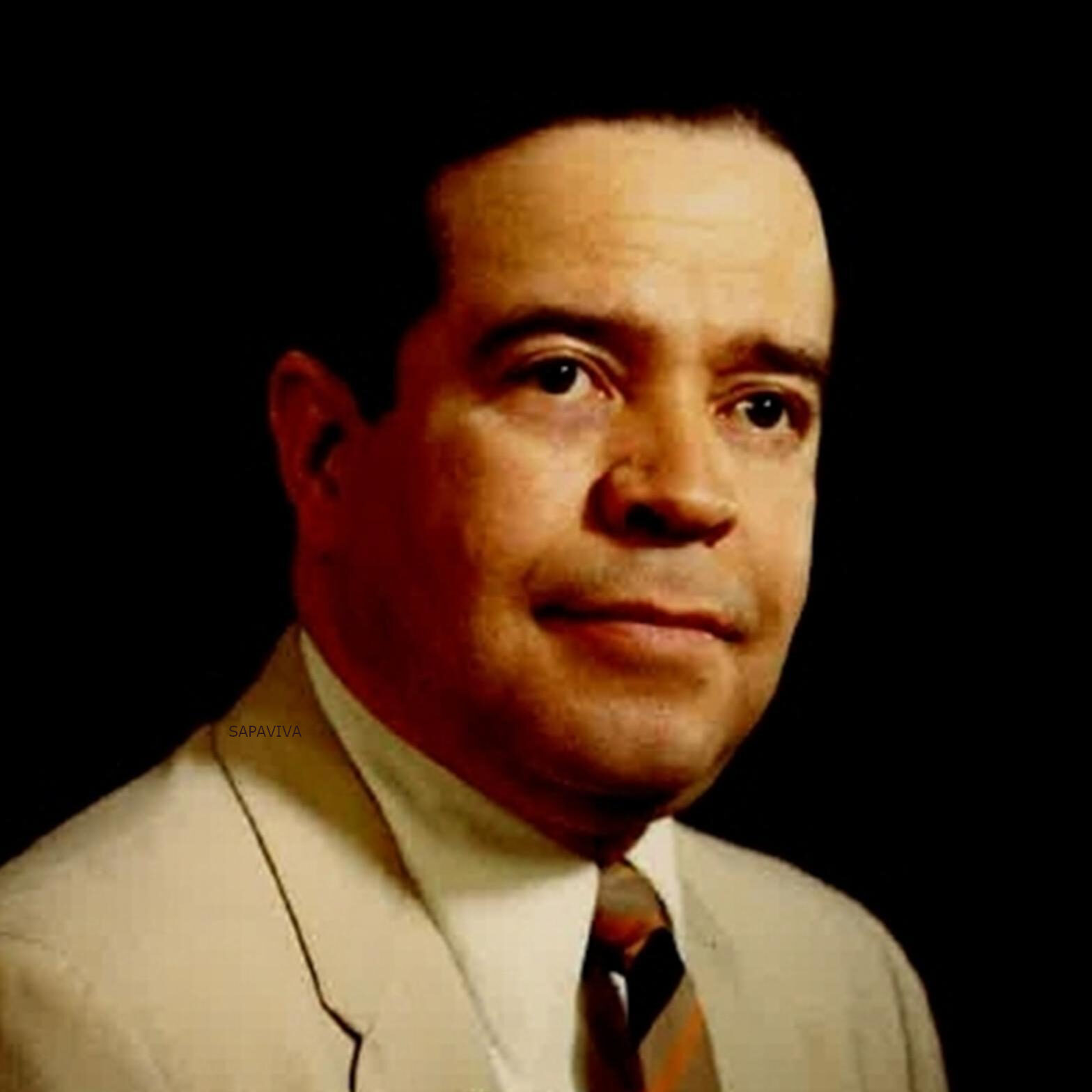
(November 27, 1923 – May 1, 2011)
Jesse Ernest Wilkins (Jr.) was infant prodigy who matured into one of 20th century’s most remarkable geniuses. His nascent circumstances left him with insurmountable challenges. He was black in the 1920s USA: one of the most gruesome decades of color-bar. Yet, as a kid, he awed the Yankees with superlative intelligence: just like his dad did a generation earlier. This ability enabled the 13-year-old become the youngest student University of Chicago ever admitted. He earned A.B., M.S., and PhD by the age of 19; and later obtained B.Eng. and M.Eng. in Mechanical Engineering. During the Manhattan Project, recruiters chose 20-year-old Wilkins over many great European scientists and mathematicians, who fled the Nazis and settled in USA. Thus, he became the youngest researcher selected for this grandest scientific project of 20th century. He subsequently became eminent Math Professor, distinguished Physics Professor, and President of American Nuclear Society. Although barely famous, Wilkins was among the best minds of 20th century. His cognitive aptitude transcended those of Albert Einstein, Nikola Tesla, and many geniuses of that era. That was why experts conceded that devoid of restrictive racism he would have achieved a lot more. His characteristic all-encompassing publications, (numbering more than 100), ramified: Multivariable Calculus, Complex Analysis, Algebraic Geometry, Topology, Metallurgy, Combinatorics, Linear Programming, Analytical Mechanics, Optics, Atomic Physics and Nuclear Technologies. Exceedingly clever and versatile, Wilkins developed the gamma-and-neutron shielding-models: vital for determining the amounts of these radiations any material could absorb; thereupon, helped pioneer the safe-design and development of nuclear reactors.
All rights reserved. © Valentine Oduenyi