
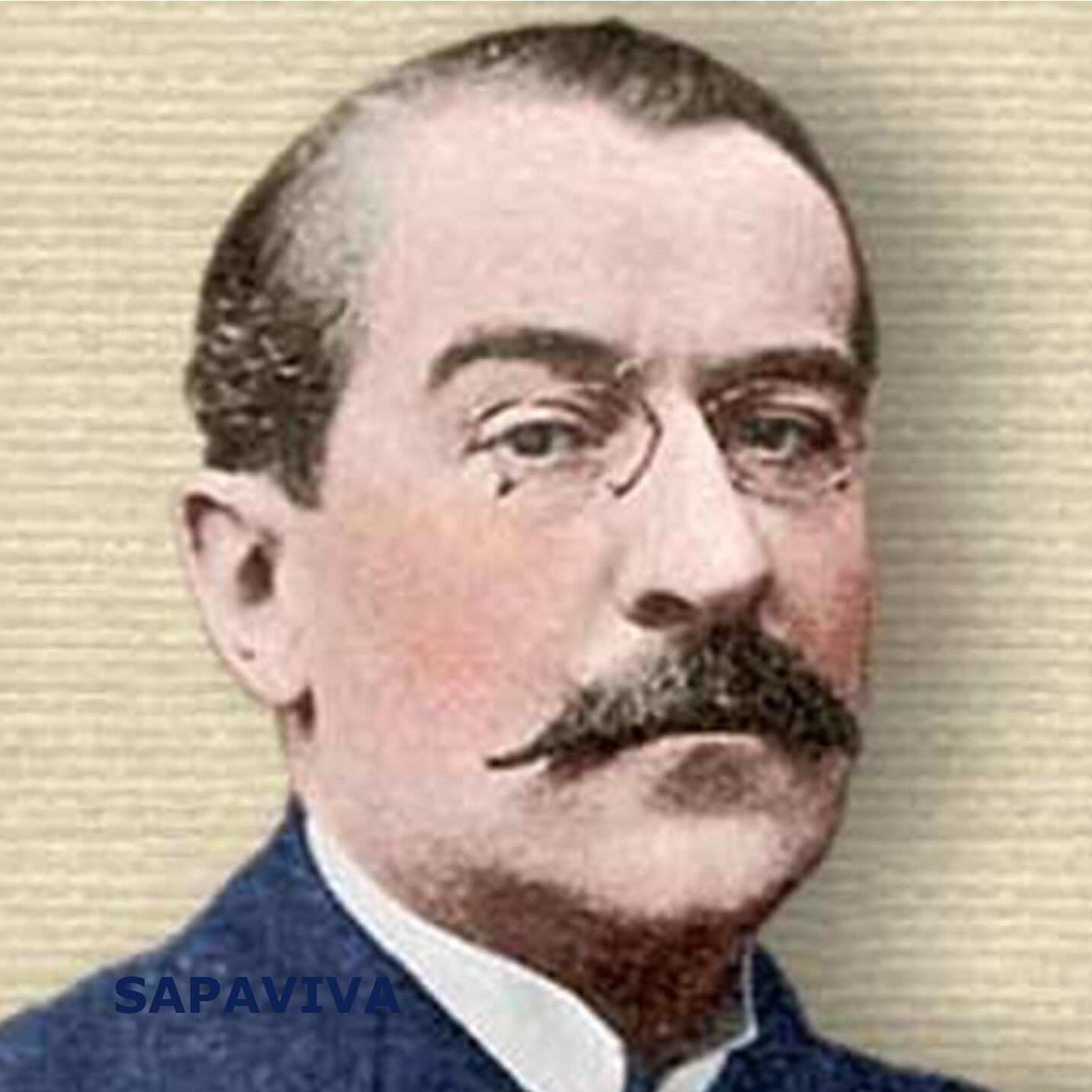
(July 24, 1856 – December 11, 1941)
Despite his brilliance, Émile Picard was not a math-buff during his preteens. He excelled in liberal arts, but memorized the logics behind arithmetic and geometry just to avoid being called-out for failing them. It was while reading a book on algebra during one of his school holidays that he became fascinated by mathematics. Although his romance began with algebra, the youngster mastered all the other branches in a short while. His quest for tertiary education saw him emerge as the top qualifier for École Normale Supérieure entrance exams, while placing second at the École Polytechnique’s. He later placed first in his Agrégation (which was a very competitive examination in France). This performance ensured that he was retained as Professeur Agrégé (i.e. Associate Professor) by the École Normale Supérieure. Picard worked on a wide variety of topics. And like his contemporary, Henri Poincaré, he was keen to disseminate knowledge by authoring popular scientific bestsellers. He even published the biographies of notable academics: including his father-in-law, Charles Hermite. His math publications ramified Number Theory, Algebra, Analysis, Geometry, Topology and Mathematical Physics. Dedicated to nurturing the next generation of scientists and mathematicians, Picard mentored a large number of students that include: Jacques Hadamard, André Weil, Stanislaw Zaremba, Paul Dubreil and Sergei Bernstein. Across maths and physics, he is the eponym of a long list of concepts (such as Picard Group, Picard Theorem, Picard Variety, Picard Functor and Picard Model). Also awarded to an outstanding mathematician every 6 years, by Institut de France, is the Émile Picard Medal, named in his honor.
All rights reserved. © Valentine Oduenyi