
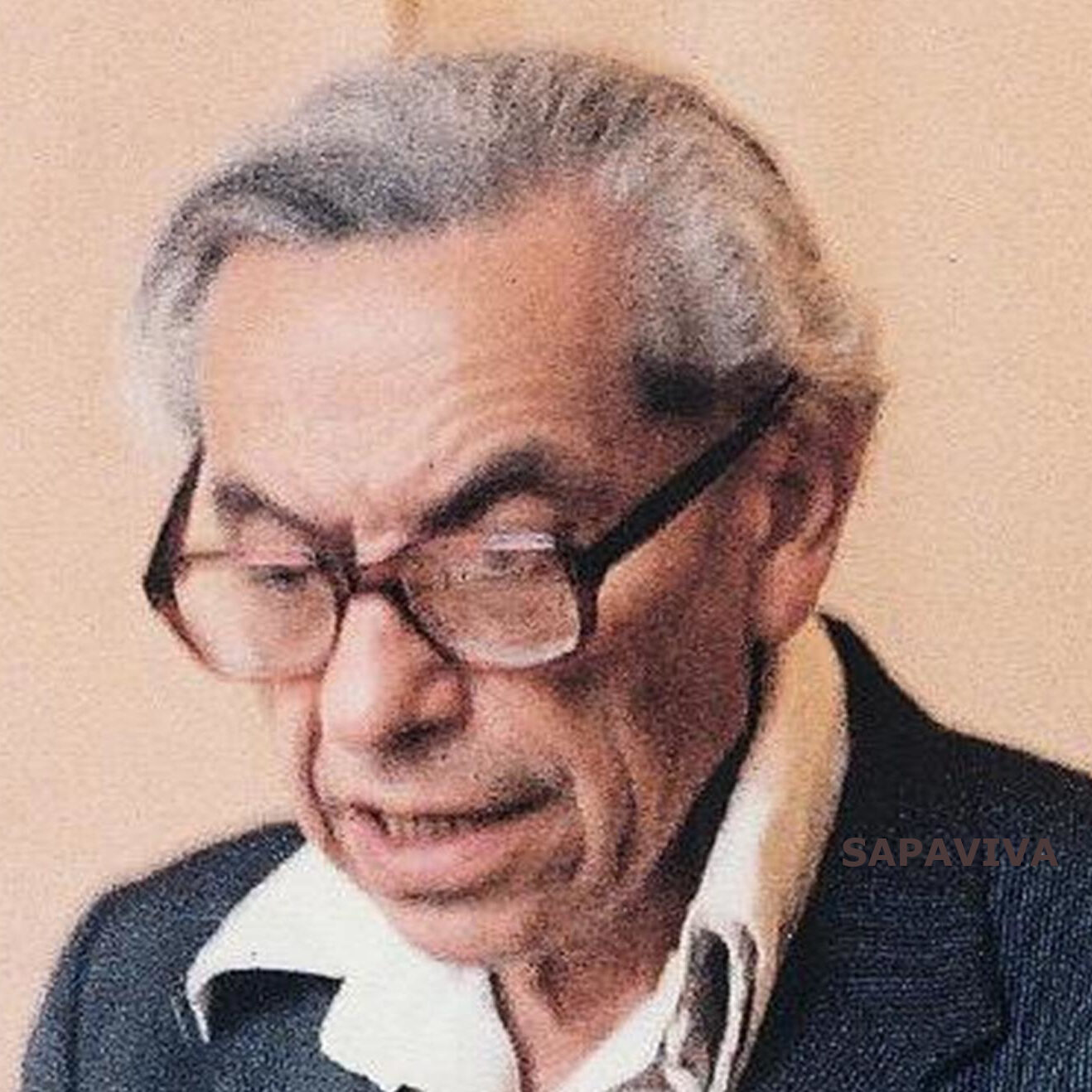
(March 26, 1913 – September 20, 1996)
Arguably the most eccentric nomad in the entire history of science, Paul Erdös was a mathematician like no other. With no home to his name; no official job, no regular business, no wife, no kids; and only math seminars to look forward to, he was the embodiment of Poisson’s 19th century assertion: “Life is good for only two things: doing mathematics and teaching mathematics”. And like Denis-Simeon Poisson, Erdös was a copper-bottomed genius. Most of his eight decades on earth was spent pursuing mathematics. As child prodigy, he began plucking theorems early in his life. Needless to stress that he caught more than a handful. There is hardly any branch of math which escaped his intrusion. In the process he became one of the most prolific mathematicians that ever lived. He also doled-out more individual conjectures than any other mathematician: since the days of Euler, Cauchy and Cayley. His published works (though mainly done in collaboration with other researchers) far outnumber those of his 20th century peers, except Saharon Shelah. From number theory to algebra to geometry to analysis to graph theory to Statistics: just name it, and you will find his work! About 1500 publications (with 450 of them authored singlehandedly) are credited to him. This immense output gave rise to the famous Erdös Number (coined-up by his admirers, and is colloquially defined as the “collaborative distance” between Paul Erdös and another mathematician). Despite his rather laissez faire attitude to life, Paul Erdös is among the most brilliant mathematicians ever. A wide variety of concepts and awards are named after him.
All rights reserved. © Valentine Oduenyi