
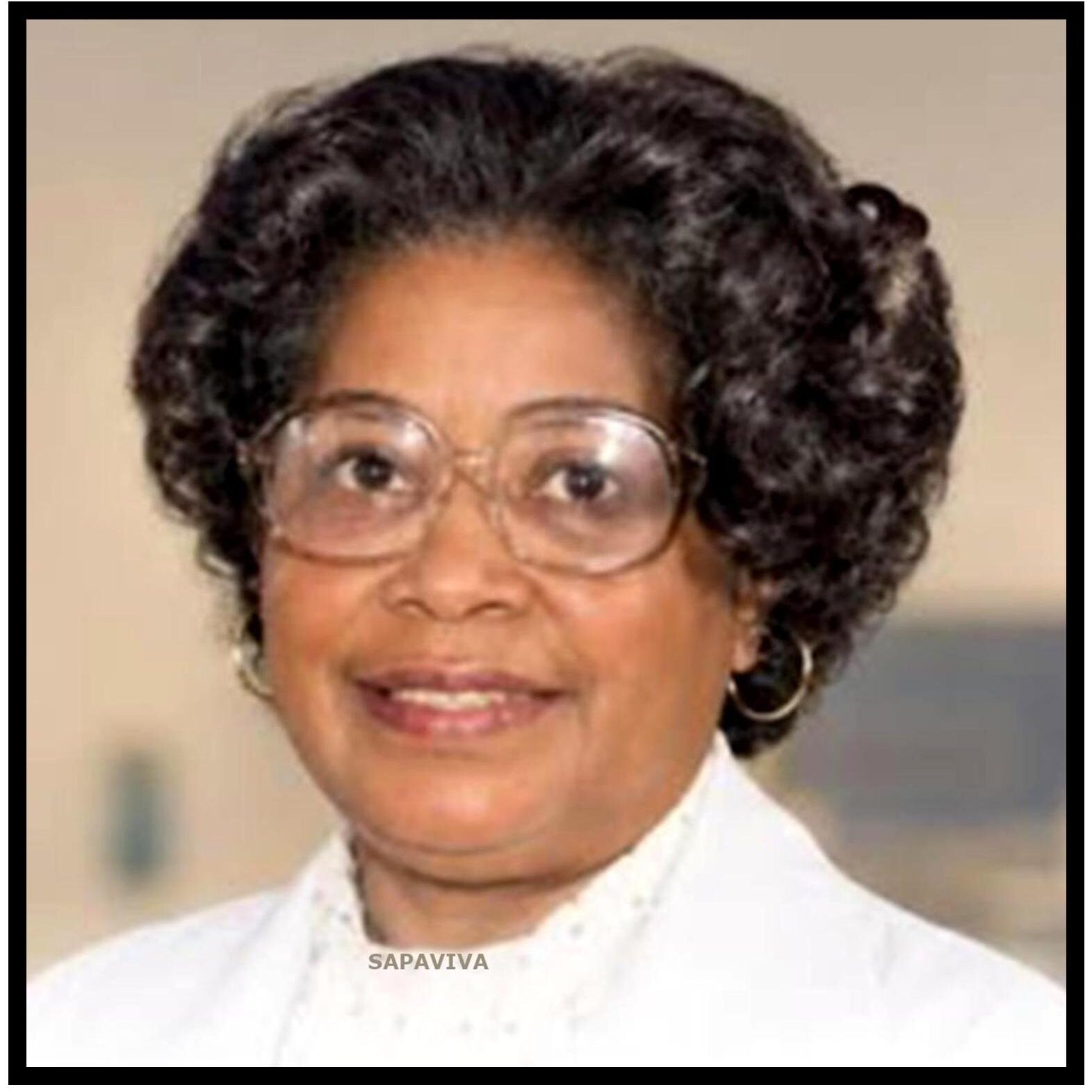
(April 9, 1921 – February 11, 2005)
The youngest of NASA’s pioneering triumvirate, Jackson was able to hold her sway within the high-achieving-circles of Katherine Coleman Johnson and Dorothy Jean Vaughan. Upon graduating High School with the highest honors, she was torn between studying mathematics and aerospace engineering. She eventually settled for both: beginning with maths. Despite USA’s prejudicial Jim Crow policies (characterized by ingrained racial and gender discriminations), her precocity enabled her gain employment as one of NACA’s leading “Human Computers” (before the establishment metamorphosed into NASA in 1958). She worked directly under Dorothy Vaughan, who was impressed by her exceptional mathematical skills. From intensive Number Crunching to Algorithms for Complex Variables, Jackson’s expertise was topnotch. She mathematically analyzed Supersonic Pressure Tunnels together with the effects of gusty winds (traveling at Mach 2) on various aircraft models. She would also use her in-depth mastery of Advanced Mathematical Algorithms, Orbital Velocities, Coefficients of Drag, Thrust Analyses, Dynamic Turbulences and Acoustic Waves (vis-à-vis Subsonic, Transonic and Supersonic conditions), to play advisory roles regarding the design and development of rockets. In appreciation (for helping the USA win the space race against archrival: the USSR), Mary Winston Jackson received the NASA Apollo Group Achievement Award. She was also awarded the Congressional Gold Medal (which is the oldest and joint-highest of all American honors). A COSPAR satellite, as well as NASA’s Headquarters Building (at Washington D.C.), were named in her memory. Also, the 2016 bestselling biographical film, Hidden Figures, summarized the interlinked NASA careers of the esteemed triumvirate: Katherine Johnson, Dorothy Vaughan and Mary Jackson.
All rights reserved. © Valentine Oduenyi