
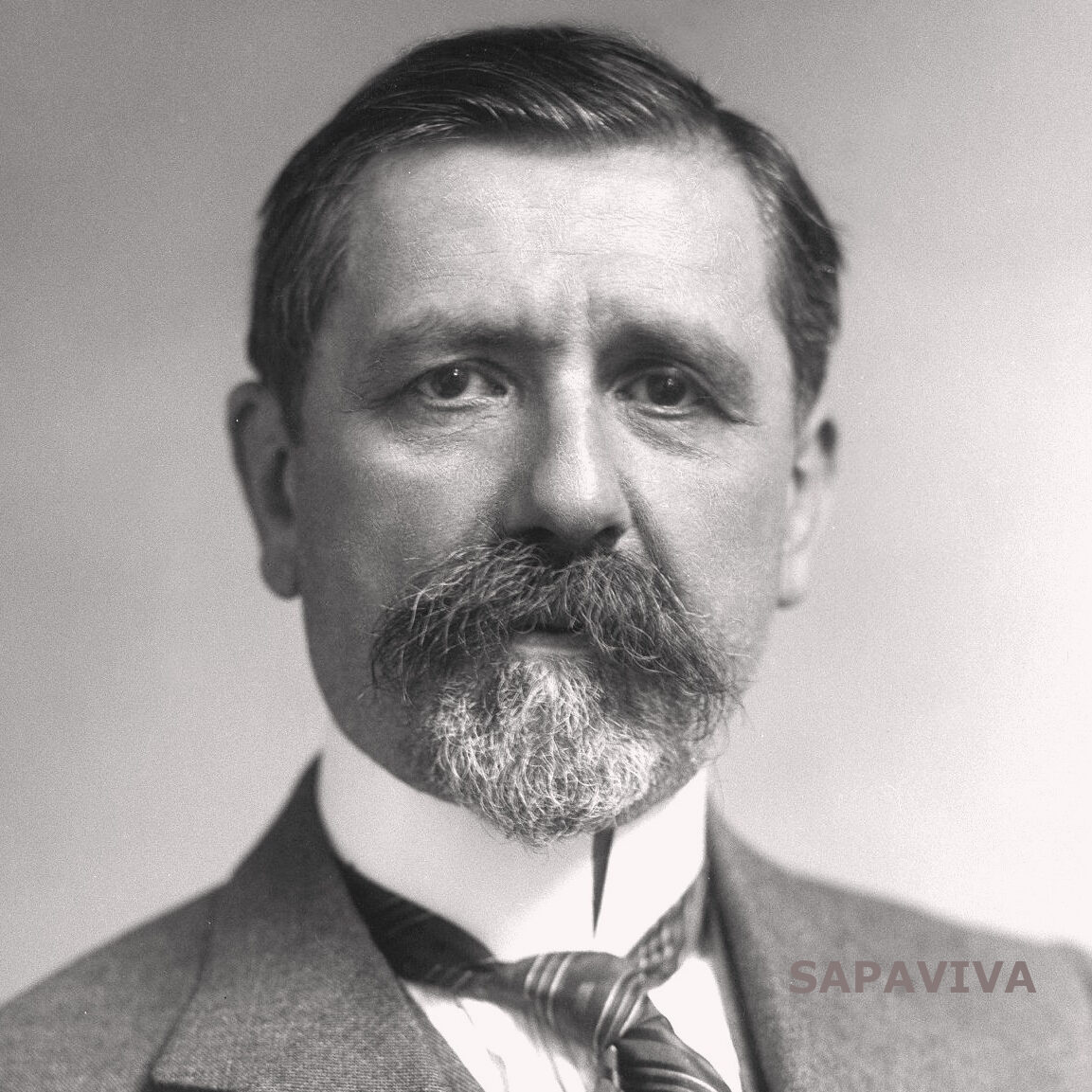
(January 7, 1871 – February 3, 1956)
Émile Borel was everything a phenomenal genius should be: discerning, imaginative, creative, versatile and analytical. He was Jacques Hadamard’s equal in terms of ability; was just as prolific, and nearly as versatile: with regards to the branches he explored. His interest in politics seemed to have distracted him a bit; however, it also helped him understand the importance of applying higher mathematics to real world situations. Unlike Hadamard who explored and improved the existing math branches, Borel seemed more interested in creating something which is entirely new. Despite his appetite for new avenues, it was Borel that meticulously transformed Probability Theory from a mere calculation of gambling odds into the rigorous jewel which it is now. His revolutionary touch ramified his outputs. For instance, he was the architect of Games of Strategy: a topic which later attained lofty heights in the custody of John von Neumann. Borel also unveiled the Measure Theory, as well as the modern Theory of Functions of a Real Variable (alongside Henri Lebesgue and René Louis Baire). Even now, both the Heine-Borel Theorem and the concept of Borel Sets remain indispensable to modern Analysis. While Hadamard labored as a dedicated academician (just like Cauchy), Borel flavored his own academia with civics, which enabled him mutate into a scientific popularizer (just like Poincaré). Émile Borel received numerous honors during his lifetime (and even posthumously). A long list of math and scientific formulations bear his name. In 1976 (which was the 20th anniversary of his death), the International Astronomical Union dedicated the 4.7-kilometer-wide Borel lunar impact crater to his memory.
All rights reserved. © Valentine Oduenyi