
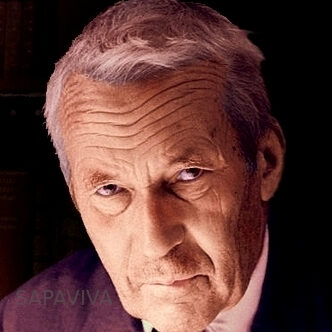
(April 25, 1903 – October 20, 1987)
Andrey Kolmogorov made outstanding contributions to various areas of maths, physics and computer science. At just 19 years old, he proved several results in Set Theory, and won acclaim by constructing a Fourier series which diverges almost everywhere. His quest for more knowledge took him to Germany where he met Richard Courant, Hermann Weyl and Edmund Landau. With them he discussed Limit Theorems, Intuitionistic Logic and Function Theory (respectively). What he gained from this trip helped him publish a treatise (in German instead of his native Russian) titled: About the Analytical Methods of Probability Theory. This was followed by another impressive title: The Foundations of the Theory of Probability, which cemented his position as authority in this branch of mathematics. In addition to Probability, Kolmogorov contributed to Computational Complexity, Fluid Dynamics, Algorithmic Information Theory, and Topology. His research on Turbulence and Stochastic Processes served the Soviets well during the Cold War. They also enabled him develop Chapman-Kolmogorov Equations: independently of Sydney Chapman. Again in 1931, during a similar research, he independently discovered the concept in statistical mechanics known as the Fokker-Planck Equation. (Hence, its alternative name became “Kolmogorov Forward Equation”). His so-called Kolmogorov Complexity is very useful in stating and/or proving the impossibility results, which are related to: Cantor’s Diagonal Argument, Goedel’s Incompleteness Theorem, and Turing’s Halting Problem. In the defunct Soviet Republics, Andrey Kolmogorov helped nurture many of the nations’ top scientists. Befittingly, numerous concepts, parameters and theorems (in mathematics, engineering, physics and computing) are named in his honor.
All rights reserved. © Valentine Oduenyi