
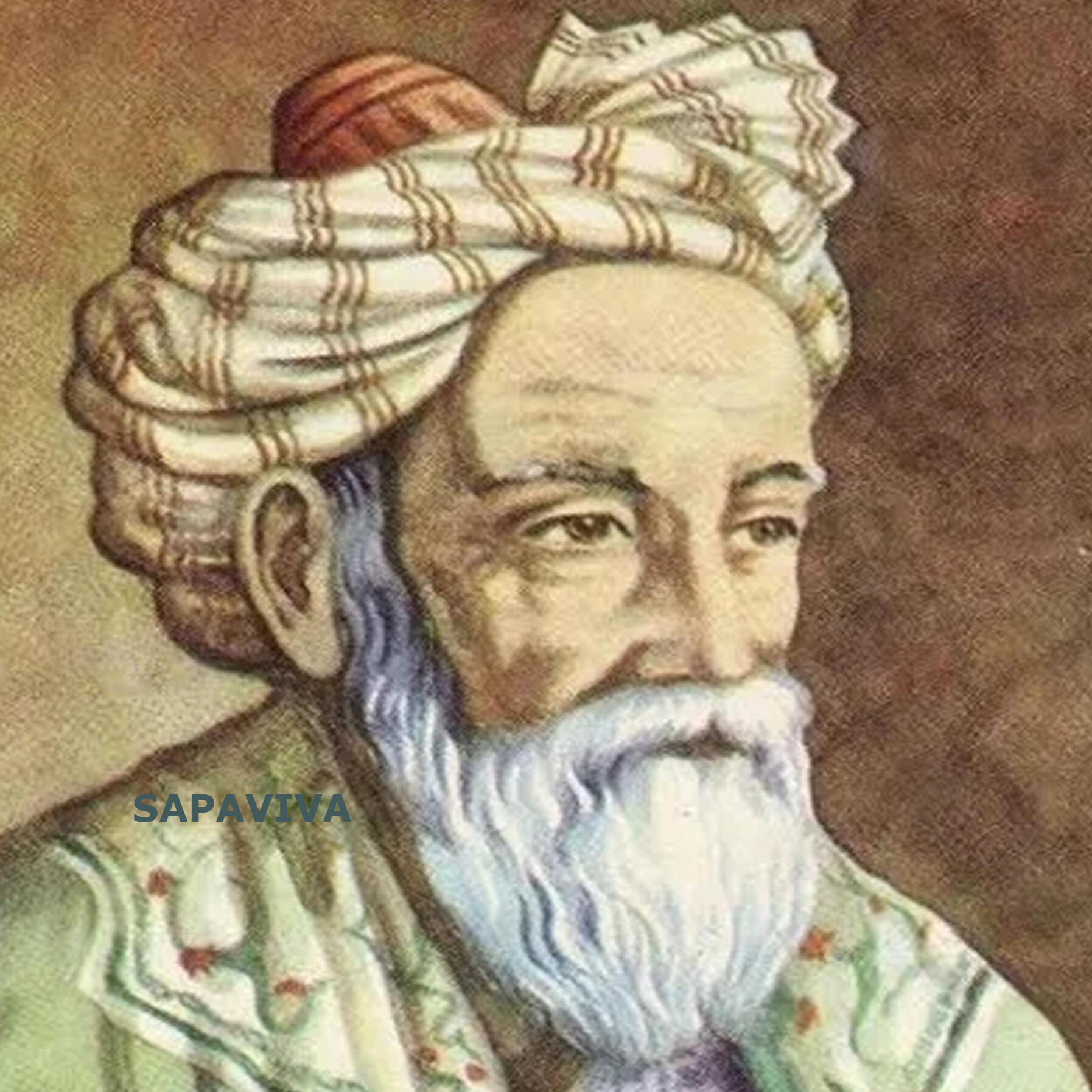
(836 – February 19, 901 AD)
Thabit was an erudite sage whose sagacities spanned arithmetic, geometry, trigonometry, astronomy, mechanics, architecture, survey, engineering, philosophy, commerce, music, and linguistics. He was among the world’s leading scholars while Europe dozed-away in the Dark Ages. One of his most notable monographs (titled: Treatise on the Derivation of the Amicable Numbers in an Easy Way) is regarded as the first publication which showed an equation with which Amicable Numbers could be derived. That explains the reason why both the Thabit Number and the Thabit Prime (in Number Theory) are named after him. He likewise tendered a generalized proof of Pythagoras Theorem — whose extensions took the Euclidean Fifth Postulate into account. He also applied his early concepts of permutations and combinations directly to chess: analyzing game complexity, piece arrangements, and move sequences, in order to estimate possible solutions applicable therein. Most of his works in mechanics pertained to the dynamics of levers and pulleys. Experimenting with various weights, he tried to evaluate the efficiencies of these simple machines: vis-à-vis the applied loads. Although referral works by several authors ascertained that he worked extensively in trigonometry and astronomy, the details of those works have been lost over the centuries. Nonetheless, his extant expositions confirmed the fact that he was a brilliant scholar who was far ahead of his era. Some of his most referred publications include: The Book of Data (titled: Kitāb al-Mafrūdāt), A Book about the Description of Weights (titled: Kitab fi Sifat Alwazn) and The Book of a Solar Year (titled: Kitāb fī Sanat al-Shams). The 3.4-kilometer-wide Thabit lunar crater is dedicated to him.
All rights reserved. © Valentine Oduenyi