
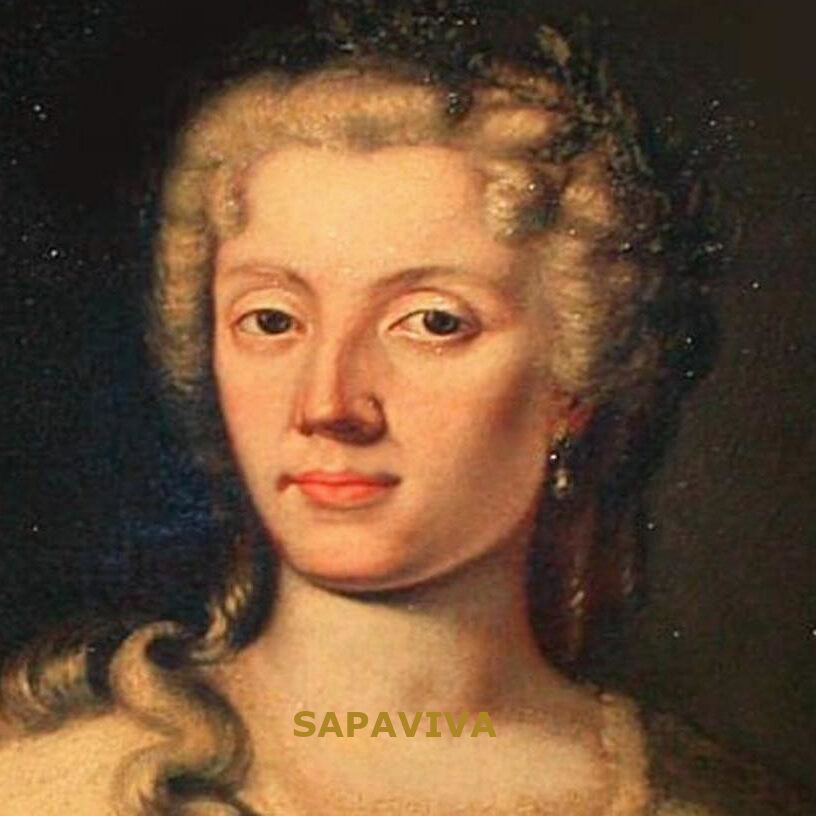
(October 29, 1711 – February 20, 1778)
Laura Bassi (as she was commonly known) was a child prodigy at a time when female intelligence received little credence; and female higher education discouraged. But due to her family’s influence and connections, she was encouraged to study. Among others, her precocity attracted the attention of Archbishop Prospero Lambertini of her native Bologna. And shortly after Lambertini was elected pope (as Benedict XIV), he became Bassi’s patron. The dame excelled in all fields, but was enthralled more by the fascinating puzzles which mathematics (most of which would be classified as physics today) offered her. With the continual support of her family plus that of the supreme pontiff, Bassi became the first female to earn a doctorate in science. As well, she was behind only the 17th century Venetian philosopher, Elena Lucrezia Cornaro Piscopia, as the second woman to bag a doctorate degree. The fact that Bassi had powerful backers made her pursuit of academics much easier than those who came after her. That, alongside her precocity and academic excellence, explains why she was offered a teaching position — with generous remunerations at University of Bologna. This also made her the first salaried female teacher at any institution of higher learning. Within maths and physics (known then as mathematics and natural philosophy), Bassi worked on arithmetic, geometry and mechanics. As was customary then, leading intellectuals exchanged ideas via correspondence. Bassi followed this tradition by corresponding with Voltaire and others. She later became the first female elected to European science academies.
All rights reserved. © Valentine Oduenyi