
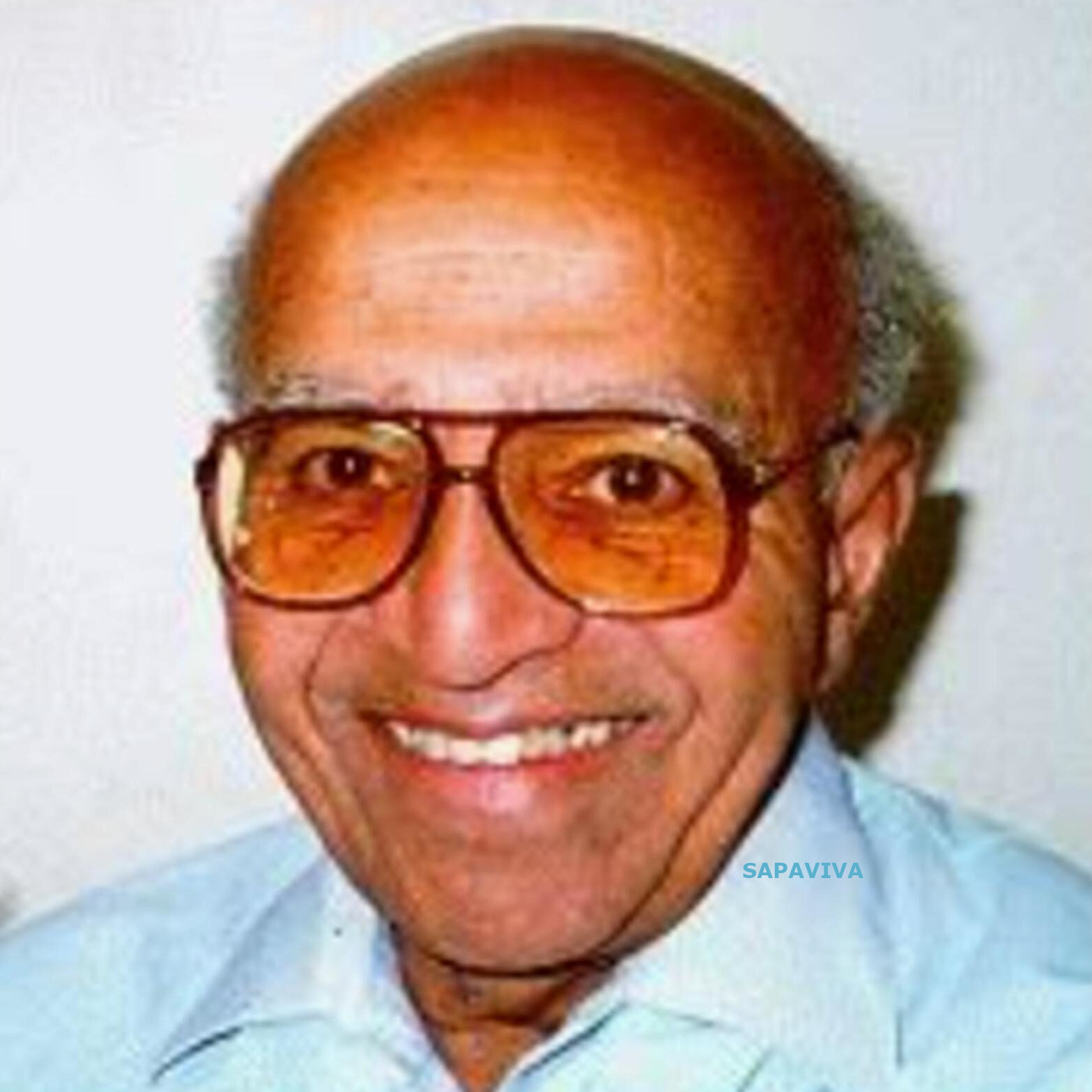
(April 24, 1919 – July 8, 2010)
Exceedingly clever, David Blackwell’s primary school teachers were so impressed by his abilities that they promoted him twice ahead of what should have been his class. The youngster later earned his PhD (aged 22), before making mincemeats of both advanced mathematics and hierarchical statistics. His dominance ramified Probability Theory, Game Theory, Information Theory, Coding Theory, Logic, Data Analysis, Stochastic Computing, and Dynamic Programming. The fundamental works he accomplished in these areas became crucial to the development of various subfields of engineering. But even more profound were their applications to both computing and its emerging branch of artificial intelligence. These led him into winning several awards, in addition to being the eponym of the Blackwell’s Contraction Mapping Theorem, the Blackwell’s Informativeness Theorem, the Roa-Blackwell-Kolmogorov Theorem, and the Blackwell Chanel. In recognition of his contributions to Hi-Tech and Artificial Intelligence, the USA government posthumously awarded him its highest scientific honor (the National Medal of Science) in 2012. Similarly, Nvidia (the world’s most valuable company, as well as the biggest hi-tech chip maker), announced its Blackwell Graphics Processing Unit architecture in March 2024. The company’s founding Chief Executive Officer, Jensen Huang, said the following in honor of Blackwell: “This GPU is named after David Blackwell, an American mathematician and statistician whose work has had a lasting impact on mathematics as well as the specific domain of AI”. In addition to advancing maths and sciences, Professor Blackwell mentored a long list of notable students that include: Richard Snowden Bucy, Beliyar Bhat, David Matula, Rolando Chuaqui, George Roussas, Carlos Alberto Barbosa and Roger Jean-Baptiste Wets.
All rights reserved. © Valentine Oduenyi